 Broderic Fernow
WEX Fuel Card Review: Is it the Right Fuel Card for Your Business?
 Broderic Fernow : Jan 15, 2026, 2:05:02 PM
Comprehensive review of the WEX fuel card, covering its features, accepting locations, discounts, controls, and alternatives.
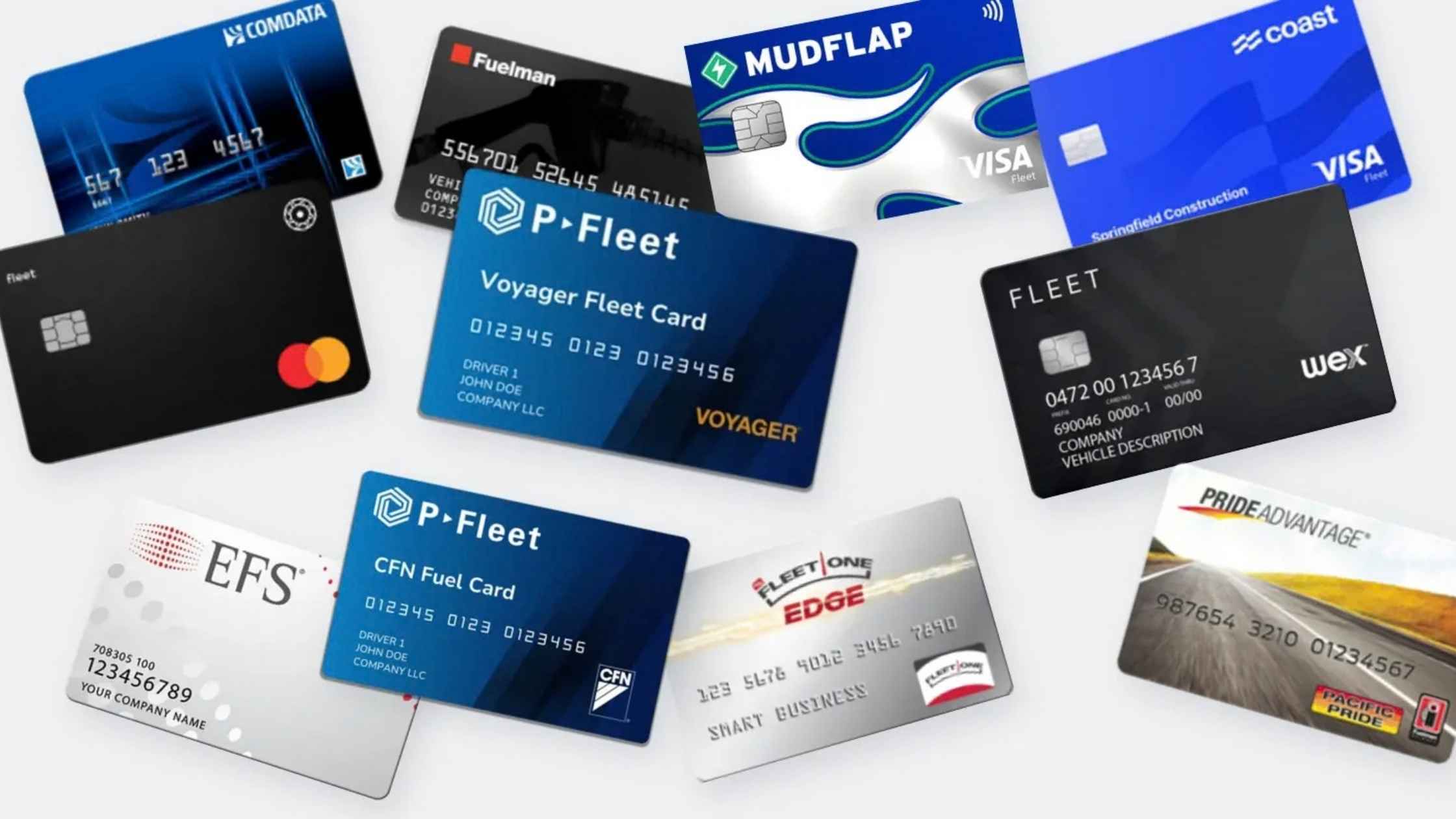
Choosing a fuel card can be confusing because there are dozens of different cards, brands, and programs in the market. But when you look at who actually owns the networks behind these cards, the market is much smaller than it first appears.
Most traditional fuel cards connect back to three major companies: WEX, Corpay, and U.S. Bank. These companies operate multiple fuel card networks and distribute their cards in different ways, including directly to fleets, through independent fuel card companies, and through branded partnerships with gas stations and other businesses.
This means two fuel cards with completely different names may actually run on the same network or even be issued by the same company. If you're looking to switch fuel card companies, understanding these relationships can help you avoid moving to another version of a card you already use.
In this guide, we'll break down the major fuel card companies, networks, branded cards, and issuers so you can better understand how the U.S. fuel card market is set up and which options are actually different.
There are three main parent companies behind most of the fuel card market in the U.S.: WEX, Corpay, and U.S. Bank. These companies operate many of the major fuel card networks, issuing their own cards while also working with other fuel card companies and partners that issue cards on their networks.
To make the market easier to understand, we've also grouped newer tech fuel cards into their own category, along with proprietary fuel cards that operate outside the major networks.
Below, you can see the five main groups, the fuel card networks behind them, and the branded fuel cards and card issuers you'll see in the market.
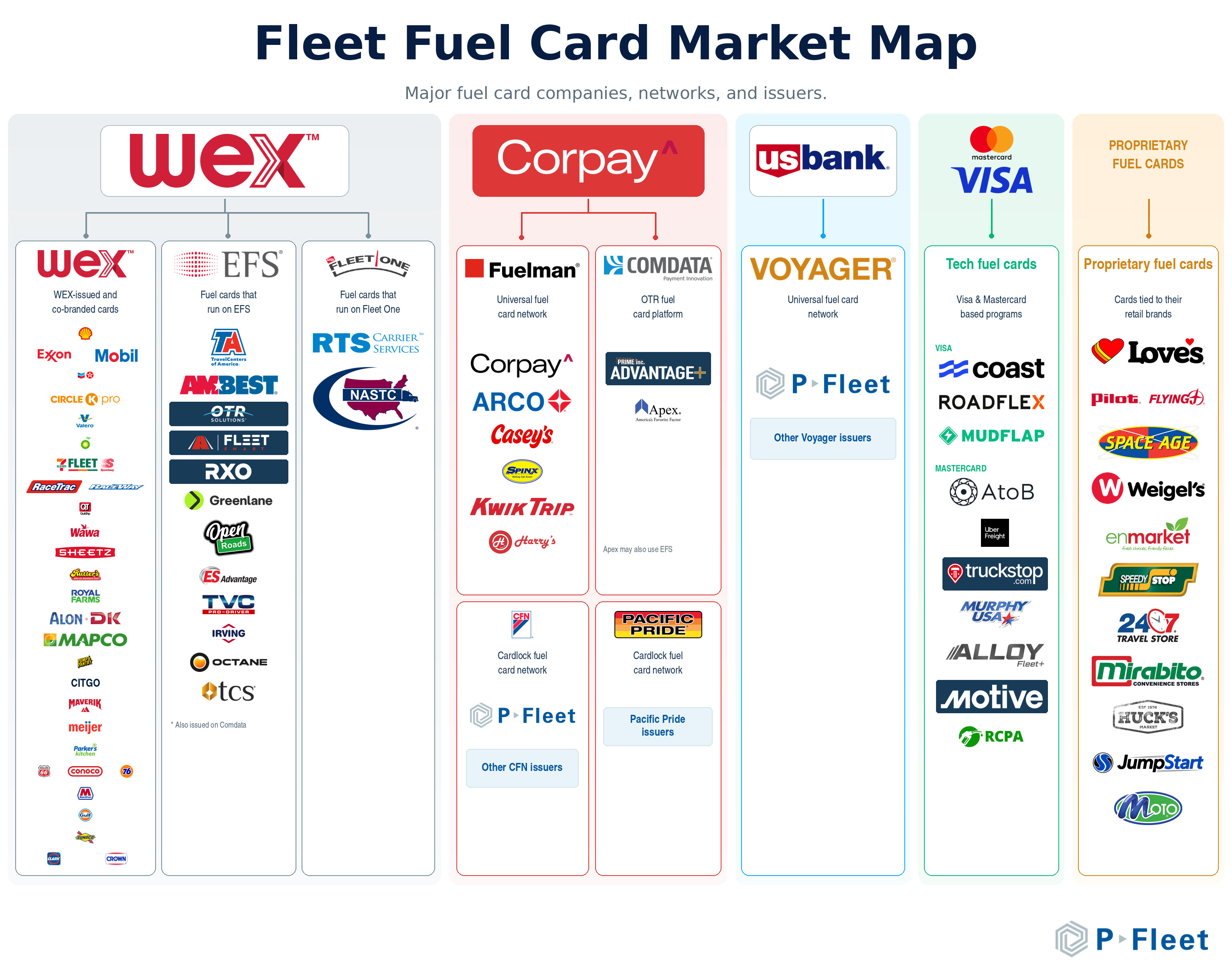
Now that you understand how the fuel card market is set up, let’s take a closer look at each major company and category to see how their networks and fuel card issuers work.
WEX is the biggest fuel card company in the U.S. that owns the WEX, Fleet One, and EFS fuel networks. Here's a chart that explains the fuel card products associated with WEX in more detail.
| WEX Fuel Cards | |||
| Card/Network | WEX | EFS | Fleet One |
| Description | Card that runs on its own network, also issues branded fuel cards under this network | WEX's OTR network acquired in 2015 | WEX's OTR network acquired in 2012 |
| Fuel Card Type | Universal card accepted at 95% of fuel stations | OTR card accepted at 16,000 truck stops | OTR card accepted at 12,000 truck stops |
| Issued By | Issued by WEX and through partnerships with gas station brands | Issued by WEX and through distributors like fleet factoring companies and trucking associations | Issued by WEX and through distributors like fleet factoring companies and trucking associations |
| Fuel Cards that Run on WEX | Fuel Cards that Run on EFS | Fuel Cards that Run on Fleet One | |
| Fuel Cards | |||
WEX’s primary fuel card is the WEX fuel card, which is accepted at 97% of fuel stations nationwide. WEX markets the card under its own brand and also partners with gas station chains to offer branded versions of the card. Many of these branded cards offer rebates at their respective stations to encourage fleets to fuel at those locations.
WEX acquired EFS in 2015, a fuel card and network built specifically for over-the-road (OTR) trucking fleets. EFS offers discounts at truck stops along with fuel card controls and tools designed for the trucking industry. Today, WEX offers the EFS fuel card directly and through distributors that already serve trucking companies, including freight factoring companies and trade associations.
Similar to EFS, WEX acquired Fleet One in 2012, another OTR fuel card and network built for trucking companies. Today, WEX offers the Fleet One fuel card directly and through a small number of distributors that serve the trucking industry.
Corpay is the second largest fuel card company in the U.S. and owns the Fuelman, Comdata, CFN, and Pacific Pride fuel card networks. Here's a chart that explains the fuel card products associated with Corpay in more detail.
| Corpay Fuel Cards | ||||
| Card/Network | Fuelman | Comdata | CFN | Pacific Pride |
| Description | Card that runs on its own network, also issues branded fuel cards under this network | Corpay's OTR network acquired in 2014 | Corpay's cardlock network acquired in 2003 | Corpay's cardlock network acquired in 2014 |
| Fuel Card Type | Universal card accepted at 60,000 stations | OTR card accepted at 8,000 truck stops | Cardlock card accepted at 3,000 cardlock locations and 65,000 retail stations | Cardlock card accepted at 1,400 cardlock locations and 65,000 retail stations |
| Issued By | Issued by Fuelman, through partnerships with gas station brands, and by independent fuel card companies | Issued by Comdata and through distributors like fleet factoring companies and trucking associations | Issued by CFN card issuers like P-Fleet | Issued by Pacific Pride card issuers |
| Fuel Cards that Run on Fuelman | Fuel Cards that Run on Comdata | Fuel Cards that Run on CFN | Fuel Cards that Run on Pacific Pride | |
| Fuel Cards | ||||
Fuelman was acquired by Corpay in 2000 and is Corpay’s universal fuel card network. Today, Corpay primarily markets the card under the Fuelman and Corpay brands, but it also has several branded fuel card partnerships and distributors that offer cards on the Fuelman network.
Comdata is Corpay’s OTR fuel card network, which Corpay acquired in 2014. Comdata primarily markets and issues fuel cards under its own brand, but also has a few branded partnerships with companies that serve the trucking industry.
The Commercial Fueling Network (CFN) was Corpay’s first cardlock network acquisition. Corpay does not directly issue or market the CFN fuel card. Instead, the CFN network is made up of independent fuel and oil marketers that own cardlock stations and issue CFN fuel cards to their customers. Most CFN cardlock locations are concentrated in the Western U.S.
Pacific Pride is a competing cardlock fuel network to CFN, with most of its locations also concentrated in the Western U.S. Corpay acquired Pacific Pride from WEX in 2014. Since the acquisition, Corpay has made the CFN and Pacific Pride fuel card programs very similar, although the cards cannot be used at each other’s cardlock locations. Like CFN, Pacific Pride fuel cards are marketed and issued by independent fuel and oil marketers.
U.S. Bank developed the Voyager fuel card and network. U.S. Banks has a distribution strategy that is different from other fuel card companies. They directly service large fleets and government contracts, and they rely on independent fuel card companies called Voyager partners to service small to medium fleets.
| U.S. Bank Fuel Card | ||
| Card/Network | Voyager | |
| Description | U.S. Bank's proprietary fuel card | |
| Fuel Card Type | Universal card accepted at 97% of fuel stations | |
| Issued By | U.S. Bank directly services large government contracts and enterprise fleets. For small to medium fleets, U.S. Bank uses Voyager partners like P-Fleet to market, issue cards, and service fleets | |
| Fuel Cards that Run on Voyager for Small - Medium Fleets | U.S. Bank Directly Services Large Fleets and Government Contracts | |
| Fuel Card | ||
Tech fuel cards are relatively new to the fuel card market. Both Mastercard and Visa have fleet networks that are more restrictive than standard credit cards, but less restrictive than traditional fuel card networks. This allows companies to build their own fuel card software and programs that run on the Mastercard or Visa fleet networks.
| Tech Fuel Cards | ||
| Card/Network | Mastercard Fleet | Visa Fleet |
| Description | Network for companies to build their platform on | Network for companies to build their platform on |
| Fuel Card Type | Universal card accepted at any location that accepts Mastercard | Universal card accepted at any location that accepts Visa |
| Issued By | Individual companies market, issue, and service customers | Individual companies market, issue, and service customers |
| Tech Fuel Cards that Run on Mastercard Fleet | Tech Fuel Cards that Run on Visa Fleet | |
| Fuel Cards | ||
Proprietary fuel cards are usually issued by station brands or small fuel card companies to serve their own customers at their own stations.
| Proprietary Fuel Cards | |
| Card/Network | Private networks |
| Description | Fuel cards that usually only work at a brand's own stations |
| Fuel Card Type | Proprietary |
| Issued By | Individual companies market, issue, and service customers |
| Stations with Proprietary Fuel Cards | |
| Fuel Cards | |
There are a lot of fuel card brands in the market, but far fewer companies and networks behind them. Understanding who operates the network, who services your account, and where the card can be used can make it much easier to compare your options.
Finding out who actually services your account is probably one of the biggest considerations when choosing a fuel card company. Customer service, fees, pricing, and other account terms can vary depending on the company that issues and services the card.
Think of it like a regular credit card. A company like Capital One may issue a credit card that runs on the Visa or Mastercard network, but Capital One determines the fees and rewards and provides the customer service. Fuel cards can work in a similar way, which is why two cards on the same fuel card network can still offer very different programs.
At P-Fleet, we offer two fuel card options that give fleets access to two different types of networks. Our Voyager fuel card is accepted at 97% of fuel stations nationwide, while our CFN fuel card gives fleets access to discount cardlock locations along with retail and truck stop coverage.
Both options come with no monthly card fees, late fees, or out-of-network transaction fees, along with fuel controls, reporting, and top rated customer support.
If you're not sure which network makes the most sense for your fleet, you can compare our fuel card options or talk with our team about where your drivers fuel and what you're looking for in a fuel card.

 Broderic Fernow : Jan 15, 2026, 2:05:02 PM
Comprehensive review of the WEX fuel card, covering its features, accepting locations, discounts, controls, and alternatives.
 Broderic Fernow : Feb 9, 2026, 7:18:07 AM
Comprehensive review of the Fleet One fuel card, covering its features, accepting locations, discounts, controls, and alternatives.
![WEX vs. Comdata: Fleet Fuel Card Comparison Guide [2026]](https://www.pfleet.com/hubfs/WEX%20vs%20Comdata.jpg) Broderic Fernow : Jan 13, 2026, 2:07:10 PM
Broderic Fernow : Jan 13, 2026, 2:07:10 PM
Compare WEX vs. Comdata fleet fuel cards to find the best option for your business. Explore discounts, fees, and reviews in this guide.