<img height="1" width="1" style="display:none" src="https://www.facebook.com/tr?id=114819295626675&amp;ev=PageView&amp;noscript=1">
APPLY NOW
CONTACT US
9 min read.

TCS Fuel Card Review 2026: Is it the Right Fuel Card for Your Business?

Jan 29, 2026 9:56:18 AM

TCS Fuel Card Review

The TCS fuel card is a solid option for trucking fleets that want strong diesel discounts at truck stops without dealing with credit lines or late fees, since it’s a prepaid fuel card program. It’s built to keep fuel spend under control, drive savings at the pump, and make fuel reporting easy with real-time transaction visibility.

In this TCS fuel card review, we’ll break down how TCS works, where it’s accepted, what discounts you can expect, what fees to watch for, and what controls and reporting you get with the platform. We’ll also cover the biggest pros and cons and provide alternatives to compare with so you can decide if it's the right card for your fleet.

Table of Contents

TCS Fuel Card: Overview

  TCS Fuel Card
Accepting Locations 12,000 truck stops
Discounts 57¢/gal on average at 2,300 in-network truck stops
Monthly card fee None
Late fee None, prepaid fuel card 
Reviews Trustpilot: 4.5/5
Fraud protection Dynamic prompt
Controls     Spending limits, dynamic prompt, authorized fueling locations
Reporting Real-time transaction visibility, transaction reports, IFTA reports


What Is the TCS Fuel Card?

The TransConnect Services (TCS) fuel card is a prepaid fuel card built for trucking fleets that fuel at truck stops. Instead of giving you a credit line, you load funds onto your account and drivers spend from that balance, so there’s no interest and no late fees. You'll get strong diesel discounts at 2,300 in-network locations, and the card is accepted at about 12,000 truck stops total. 

TCS also provides fleet managers with fuel card controls. Their Dynamic Prompt requires the driver to open the TCS app and generate a one-time code that must be entered at the pump before fueling. On top of that, you can set spending limits, restrict fueling to approved locations, and limit purchases by state. On the back office side, you get real-time transaction visibility, downloadable transaction reports, and IFTA reporting

Where Is the TCS Fuel Card Accepted?

The TCS fuel card is accepted at 12,000 truck stops, and 2,300 of those are in-network locations that offer discounts with no out-of-network transaction fees. You can find accepting stations in the TCS mobile app or through the online fuel card portal after you open an account.

TCS Fuel Card Discounts

TCS offers fuel discounts averaging 57¢ per gallon at 2,300 in-network locations, along with additional savings on non-fuel items like maintenance, tires, roadside assistance, and DEF.

Fuel Discounts 

Here are the brands included in TCS’s 2,300 discounted locations. You can use the TCS Fuel Finder to find nearby discount stations and see the average savings by state for the prior quarter.

Brand
7-Eleven
7FLEET Diesel Network
Love's
AMBEST Fuel Stops
Casey’s
Irving
Kwik Star
Kwik Trip
Maverik
Petro Stopping Centers
Road Ranger
Roady’s Truck Stops
Sapp Bros.
Speedway
Stripes
TA
TA Express


Other Discounts

Here are the discounts TCS offers on non-fuel items.

Brand Discount Type
TA Truck Service Centers Tires, preventative maintenance, services
7Fleet Diesel Network
(7-Eleven, Speedway, Stripes)
50¢/gal discount on DEF
FYX Fleet roadside assistance


TCS Fuel Card Fees

The only fee TCS charges is an out-of-network transaction fee at truck stops that aren’t part of its 2,300 in-network locations. Other than that, there are no monthly card fees or account setup fees. And since TCS is a prepaid fuel card (not a credit account), there are no late fees either.

Fee Amount
Out-of-network transaction fee Varies by station


TCS Fuel Card Controls and Reporting

Controls

  • Dynamic Prompt: Requires the driver to log into the TCS app to generate a one-time authorization code that must be entered at the pump before fueling.
  • PIN: Custom number assigned to each driver. A valid PIN must be entered to enable fueling.
  • Authorized fueling locations: Restrict the card to work only at specific locations. For example, you can require drivers to fuel only at in-network locations to get discounts and avoid transaction fees.
  • Purchase limits: Set spending limits to control how much fuel drivers can buy.
  • State restrictions: Restrict cards so they only work in certain states.
  • Fuel vs. non-fuel purchase limits: Set/change limits on fuel products and non-fuel products to control what can be purchased.

Reports

  • TCS Fuel Finder: View current fuel discounts and prices by site.
  • E-receipts: Receive emailed receipts for each purchase.
  • Real-time transaction visibility: Monitor transactions in real-time.
  • Transaction reports: View transaction reports and filter by product, card, date, and state.
  • IFTA fuel report: Access the fuel information you need for IFTA reporting.
  • Driver settlement report: Generate driver settlement reports.
  • Savings/discount reporting: Track fuel savings/discounts per day, month, or lifetime of the account.

Pros and Cons of the TCS Fuel Card

Pros

  • Strong truck stop savings at in-network locations
  • Good customer reviews on Trustpilot

Cons

  • Transaction fees at out-of-network locations
  • Prepaid fuel card only, no credit terms
  • Acceptance is truck-stop focused. It’s great for fleets who primarily fuel at truck stops, but it’s not a "fuel anywhere" card 

TCS Alternatives

If you want to compare other fuel cards like TCS, check out the best fuel cards for trucking companies.

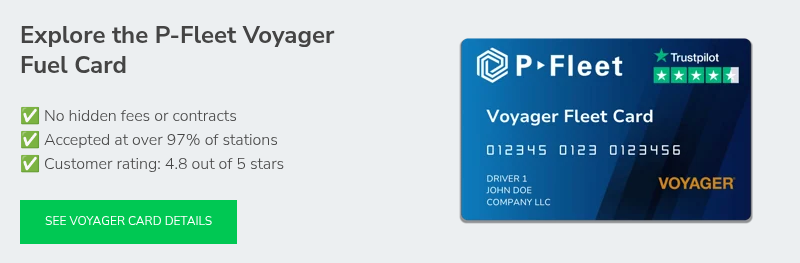
One strong alternative to consider is the Voyager fuel card, which offers:

  • Accepted at 97% of fuel stations
  • No monthly card fees, account setup fees, late fees, or extended network fees
  • Trustpilot rating: 4.8/5
  • Free fraud loss coverage

Broderic Fernow

Written by Broderic Fernow

Broderic is a marketing manager with more than a decade of experience in the fleet and fuel card industry. He specializes in creating helpful content and campaigns that help businesses simplify their fuel operations strategies.